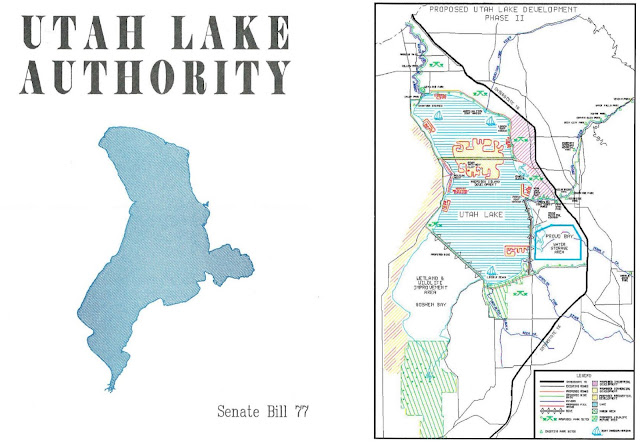
- The scientific community has released fives sets of documents on the project:
- An overview of the Utah Lake ecosystem, including its history, current status, and potential futures (Jul 29 2022): Getting to know the Utah Lake Ecosystem
- A public letter of warning about the content of the proposal and the tactics of LRS (Dec. 29 2021): Island proposal could severely damage Utah Lake
- A magazine adaptation of the Getting to Know the Utah Lake Ecosystem article above with photos from community members (Feb. 7 2022): Utah Lake: An Ecosystem in Recovery
- A review of LRS's Army Corps application (Feb. 14 2022): Utah Lake island application lacks restoration plan and fails to demonstrate benefits or need
- An overview of comments to the Army Corps about LRS's application (May 16 2022): Utah Lake island application draws questions and criticism from across the country
- The most in-depth journalism has been done by Brian Maffly, Leia Larsen, and their colleagues at the Salt Lake Tribune:
- Jan. 20 2018: Known for toxic algae, Utah Lake could become a housing development for half a million people
- Feb. 21 2018: Lawmakers back giving developers parts of Utah Lake for an island subdivision — in exchange for fixing the polluted lake’s many problems
- Aug. 5 2021: Utah Lake can be saved without massive dredging sought by developers, experts say
- Dec. 7 2021: Will EPA help fund Utah Lake island-building project?
- Jan. 19 2022: Utah Lake dredging proponents sue BYU professor who criticized project
- Feb. 1 2022: Artificial islands as real estate? The murky finances behind the Utah Lake Restoration project
- Feb. 2 2022: Facing $3 million lawsuit, scientist countersues Utah Lake's would-be dredgers
- Feb. 2 2022: Federal docs give first look at Utah Lake plan to build islands for real estate
- Feb. 12 2022: Company experts say dredging Utah Lake will be its salvation. Here's why critics oppose the project
- Feb. 23 2022: Utah lawmakers move to tighten requirements for Utah Lake island real estate project
- Feb. 17 2022: Proposed Utah Lake Authority sails through House committee, but faced some public criticism
- Mar. 8 2022: Would Utah Lake dredging really increase Utah's water supply? Don't bet on it.
- Mar. 28 2022: Would dredging Utah Lake upset a century of peace over water rights?
- Mar. 31 2022: How Utah Lake once sustained tribes and Mormon pioneers and why it needs help
- Jun. 8 2022: Facing $3 million lawsuit, dredging foe files ‘anti-SLAPP’ action
- Aug. 9 2022: Polling shows strong support for Utah Lake dredging, but critics say the survey is biased
- Aug. 17 2022: The Utah Lake dredging proposal is not legal, officials tell lawmakers
- Oct. 13 2022: Army Corps pauses Utah Lake dredging permit, citing lack of documentation supporting the project
- Oct. 27 2022: Utah Lake dredging project rejected by Division of Forestry, Fire and State Lands
- Dec. 6 2022: Utah Lake’s would-be dredgers demand controversial island project be reinstated
- Jan. 12 2023: Plan to dredge Utah Lake isn’t sunk. Developers sue the state to revive it.
- Jun. 14 2023: Plan to dredge Utah Lake islands appears dead as developer dissolves business
- July 14th 2023: With Utah Lake dredging project sunk, Lake Restoration Solutions files for bankruptcy
- July 17th 2023: Lake Restoration Solutions files for bankruptcy
- Aug. 4th 2023: Utah Lake dredging CEO paid himself thousands before stiffing scientist, attorneys and consultants
- Oct. 26th 2023: Utah Lake official steps down after he’s asked about letters in support of dredging, gets hired by Vineyard
- Nov. 8th 2023: A Utah Lake dredging critic got dragged into a lawsuit with a private company. Did he also lose a public grant?
- Feb. 1st 2024: Lawmakers turn to Utah Lake to help rescue Great Salt Lake. Will dredging be part of the solution?
- The Daily Herald has done some excellent coverage on the project, with most articles by Genelle Pugmire and Ashtyn Asay:
- Dec. 7 2021: Plan to restore Utah Lake met with resistance from Utah County conservation groups
- Dec. 30 2021: More than a hundred ecologists, engineers and environmental scientists sign letter denouncing Utah Lake proposal
- Jan. 12 2022: Utah Lake Summit provides insight on body’s future
- Feb. 10 2022: Vineyard gets first look at Utah Lake restoration project
- Feb. 25 2022: Stratton, Conserve Utah Valley hold town hall after House vote
- Mar. 18 2022: Utah Lake Restoration Project must complete Environmental Impact Statement
- Apr. 16 2022: Documents probe Vineyard letter supporting Utah Lake Restoration Project
- May 5 2022: Local leaders reconvene for second Utah Lake Summit
- Jun. 11 2022: Benjamin Abbott files anti-SLAPP motion against Lake Restoration Solutions
- Jun. 11 2022: BYU professor presents '7 more problems' with Utah Lake Restoration Project
- Aug. 17 2022: Environmental group polls show lack of support for Utah Lake Restoration Project
- Aug. 19 2022: Utah Lake Restoration Project called ‘not legally sound’ by state agency director
- Aug. 23 2022: Utah Valley Earth Forum to host public panel on Utah Lake restoration efforts
- Aug. 24 2022: UVEF hosts public forum on Utah Lake restoration efforts
- Oct. 27 2022: State agency cancels Utah Lake island proposal from Lake Restoration Solutions
- Dec. 13 2022: Denial of Vineyard records request the subject of state committee hearing
- Dec. 17 2022: Records committee: Vineyard appropriately handled GRAMA requests
- Jan. 13 2023: Lake Restoration Solutions sues Utah over canceled plan to dredge Utah Lake
- Jan. 25 2023: Judge tosses Utah Lake dredger’s defamation suit against scientist, ruling it abused the legal system
- Jun. 14 2023: Proposal to build islands in Utah Lake seemingly over as company dissolves
- Jun. 26 2023: Literary compilation seeks to highlight, celebrate Utah Lake
- Aug. 4 2023: Utah Lake dredging CEO paid himself thousands before stiffing scientist, attorneys and consultants
- Oct. 25 2023: Utah Lake official steps down after he’s asked about letters in support of dredging, gets hired by Vineyard
- Oct. 27 2023: Family won’t donate land after Utah Lake island plan would have put road through property
- Nov. 2 2023: Utah Lake-dredging CEO paid his own son $3,000 for a monthlong internship
- Nov. 2 2023: An interactive timeline of Lake Restoration Solutions’ attempt to get millions of dollars for its Utah Lake dredging project
- Nov. 8 2023: A Utah Lake dredging critic got dragged into a lawsuit with a private company. Did he also lose a public grant?
- Dec. 15 2023: ‘It’s un-American’: Vineyard residents decry changes made by City Council members during their final days in office
- Jan. 31 2024: Former Utah governor asks, could water in Utah Lake help fill the Great Salt Lake?
- Feb. 1 2024: Lawmakers turn to Utah Lake to help rescue Great Salt Lake. Will dredging be part of the solution?
- Feb. 2 2024: Private interests ask for more Utah taxpayer money to ‘roller fell’ forests, lobby against wolves
- Feb. 16 2024: Lawmakers move forward to repeal legislation that would have allowed Utah Lake island development
- Feb. 28 2024: Could a bill to study Utah Lake end up supporting a reservoir in the Great Salt Lake?
- Kyle Dunphey, Amy Joi O'Donoghue, Benoît Morenne, and others at the Deseret News have run several pieces on the lake. At the rally at the Capitol, I accidentally hugged Kyle when I saw him (I thought he was someone I knew personally), but as far as I know, that hasn't unduly influenced his coverage too severely:
- Jan. 9 2018: Group proposes cleanup, island city at Utah Lake
- Oct. 20 2021: Is it really time to build islands on Utah Lake?
- Oct. 22 2021: Man-made islands could change Utah Lake forever. Here are 6 things you need to know
- Jan. 14 2022: What does the future hold for Utah Lake development, ecosystem?
- Jan. 20 2022: The contentious debate over the future of Utah Lake heats up as developer sue critic
- Feb. 1 2022: BYU professor pushed back on allegations of defamation from Utah Lake developers
- Feb. 12 2022: Opposition mounting against Utah Lake project, developers say 'trust is gained over time'
- Feb. 26 2022: 2 bills lawmakers say will steer Utah Lake toward a cleaner future gaining steam in legislature
- Aug. 8 2022: Dredging up the past
- Aug. 25 2022: After state strikes island idea, what’s next in the effort to restore Utah Lake?
- Oct. 27 2022: State rejects massive project to dredge Utah Lake and build islands
- Jun. 14 2023: Utah Lake island project sinks after company behind proposal dissolves
- BYU's student paper, the Daily Universe has run a series of articles on the lake and the project:
- Jan 10 2022: BYU environmental advocates take stand against Utah Lake development
- Feb. 1 2022: BYU professor named defendant in defamation lawsuit, says suit has implications for future of Utah Lake
- Feb. 7 2022: Utahns rally on Capitol Hill to protest Utah Lake development
- Feb. 11 2022: Utah Lake Restoration Project under federal review to evaluate environmental impact
- Mar. 9 2022: Community project to revive Vineyard wetlands put on hold
- Utah Business has also run four pieces that I found succinct and informative (Rachel Dalrymple, Jennifer Alsever, and Samuel Walker):
- Dec. 10 2021: Utah is building the largest artificial islands in the world
- Feb. 15 2022: How should we decide the fate of Utah Lake?
- Jun. 3 2022: Will human-made islands improve Utah Lake—or will it become “the Dubai of Utah?
- Oct. 25 2022: Utah Lake building project moves forward as the public remains divided.
- There have been four podcasts covering the drama:
- Doug Fabrizio at Radio West did a two-part series on the lake and the island project:
- Feb. 24 2022: The Past, Present and Future of Utah Lake: Part I
- Mar. 10 2022: The Past, Present and Future of Utah Lake: Part II
- Jeff Beck hosted local community experts Peggy and Rich on his podcast Left of the Lake:
- Jul. 21 2022: Islands in Utah Lake Part I
- Jul. 28 2022: Islands in Utah Lake Part II
- Jan. 5 2023: Ben Abbott and the Utah Lake Island Project
- Conserve Utah Valley's Utah Lake Update has provided quick snippets over the past year:
- Jan. 28 2022: A Lake in Recovery
- Jan. 31 2022: Islands on the Lake
- Feb. 16 2022: Utah Lake Authority (HB 232)
- Feb. 16 2022: The Legislators are Listening (HB 240)
- Nov. 14 2022: Can I Take Down My Yard Sign?
- Nov. 14 2022: Post-Island Utah Lake
- BYU's Constant wonder (Aug. 23 2023): More Love for a Big Lake That's Often Belittled
- There have also been several written pieces across other platforms:
- Associated Press and KSL (May 20 2018): Academics skeptical of Utah Lake 'island city' proposal
- abc4.com (Dec. 8 2021): Islands in Utah Lake? Maybe, now that a restoration project has been waitlisted for an EPA loan
- KSL (Jan. 14 2022; this is the article that broke the lawsuit story. It originally had the misleading title that included "sued for false statements", but they updated the headline): BYU assistant professor sued for statements about Utah Lake project
- KSL (Feb. 3 2022): Developer discusses plan to revive, restore Utah Lake
- abc4.com (Mar. 16 2022): U.S. Army Corps accelerates Utah Lake Restoration
- The Center Square (Jul. 8 2022): Tug of war over water conservation in Utah
- KUTV (Aug. 17 2022): Utah Lake islands plan 'unconstitutional' and legally unsound, official tells lawmakers
- KSL (Aug. 22 2022): $6B Utah Lake restoration project is 'unconstitutional,' state report finds
- KSL (Aug. 24 2022): After state strikes island idea, what's next in the effort to restore Utah Lake?
- KSL (Dec. 7 2022): Developer behind Utah Lake islands project appeals state's decision to scrap application
- The Real Deal (Dec. 11 2022): Utah company to appeal state pulling plug on $6B lake proposal
- Fox 13 (Jan. 12 2023): Lawsuit filed over Utah Lake islands project
- Fox 13 (Feb. 4 2023): State wants Utah Lake islands lawsuit thrown out
- Adventure.com (Jun. 14 2023): The case of Marker Wadden: Can humans build islands that live up to the healing powers of nature?
- KSL News Radio (Feb. 19 2024): Bill regarding a controversial, failed Utah Lake project advances
- KSL (Mar. 1 2024): Lawmakers repeal last component of Utah Lake island plan, call for new study
- It's harder to compile the radio coverage, but there has been pretty frequent coverage on KSL, and Aimee Van Tatenhove and her colleagues at Utah Public Radio (UPR) and KUER have done a nice series of interviews and pieces on the lake:
- KUER (Jan. 11 2022): A storm is brewing over the future of Utah Lake
- UPR (Jan. 24 2022): A deep dive into Utah Lake: Part 1
- KSL news radio (Feb. 1 2022): BYU professor files countersuit against Utah Lake developer
- KSL Dave & Dujanovic (Feb. 2 2022): Interview with Jon Benson
- UPR (Feb. 04 2022): Public comment period open for permit application to dredge Utah Lake
- UPR (Feb. 10 2022): A deep dive into Utah Lake: Part 2
- UPR (Feb. 10 2022): Utah Lake amendments bill passes in committee
- Rod Arquette (Feb. 16 2022): Interview with Jon Benson
- UPR (Mar. 04 2022): New website to increase public involvement with proposed Utah Lake project
- KUER (May 5 2022): Utah Lake's June Sucker is threatened and this project hopes to put its house back in order
- KSL at Night (May 11 2022): Taylor Morgan & Maura Carabello interview Greg Hughes
- The Daily Buzz (Jun. 9 2022): What to know about the Utah Lake anti-SLAPP lawsuit
- KSL news radio (Aug. 8 2022): Poll shows support in Utah County for the Utah Lake Restoration Project
- KUER (Aug. 18 2022): State Agency calls Utah Lake Restoration project 'unconstitutional' and 'a risk'
- KSL news radio (Aug. 18 2022): Utah Lake restoration called “unconstitutional” by state agency
- UPR (Aug. 22 2022): Utah Lake island-building proposal deemed unconstitutional by state
- UPR (Oct. 14 2022): Scientist says Utah Lake shows how a community can protect the environment
- KSL news radio (Oct. 27 2022): Utah Lake restoration application canceled by Division of Forestry
- Dave & Dujanovic (Nov. 2 2022): Utah Lake restoration project pulled
- KSL news radio (Dec. 7 2022): Lake Restoration Solutions in legal battle over Utah Lake
- UPR (Feb. 19 2024): Western states in favor of conservation and new legislation supports Utah Lake
- I don't watch as much TV (how do you even watch TV nowadays?), but there has been some good coverage, especially by Ben Winslow at Fox13:
- KSL (Jan. 10 2018): Group wants to build island city on Utah Lake to combat pollution
- abc4utah (Jan. 10 2018): Development group seeks to build an island city in the middle of Utah Lake
- abc4utah (Aug. 3 17 2021): Researchers are holding an emergency symposium on Utah Lake
- Fox 13 (Dec. 6 2021): Utah Lake on shortlist for nearly $1 billion in federal funds
- Fox 13 (Feb. 2 2022): Plans to build islands in Utah Lake as part of restoration project move forward
- abc4utah (Feb. 7 2022): Protest against developers making islands on Utah Lake
- Fox 13 (Feb. 7 2022): Demonstrators rally at Capitol Hill to protest plans for Utah Lake restoration project
- Fox 13 (Feb. 8 2022): Bill regulating Utah Lake dredging passes through House committee
- abc4utah (Feb. 24 2022): Push back on Utah Lake dredging project
- Fox 13 (May 16 2022): The future of Utah Lake
- abc4utah (Aug. 8 2022): New poll divides Utahns over Utah Lake
- Fox 13 (Aug. 17 2022): Utah Lake proposed dredging plan stopped in its tracks
- KUTV (Aug. 18 2022): Opponents of Utah Lake islands project feel emboldened after legal issues revealed
- Fox 13 (Oct. 27 2022): Utah Lake islands project is rejected by state officials
- Fox 13 (Dec. 5 2022): Company appeals state rejection of Utah Lake islands project
- Fox 13 (Jan. 11 2023): Utah again rejects Utah Lake islands project
- Fox 13 (May 30 2023): Judge to decide fate of Utah Lake islands project
- Fox 13 (Jun. 5 2023): Judge issues split ruling in lawsuit over Utah Lake islands project
- Fox 13 (Jun. 14 2023): Utah Lake islands project likely dead after company dissolves
- abc4utah (Feb. 21 2024): Bill linked to controversial Utah Lake islands project on track to be repealed
- Governor Cox has held two press conferences that addressed LRS's proposal. In both, he repeated LRS talking points:
- Feb. 17 2022: Comparing Utah Lake to the Great Salt Lake
- Aug. 18 2022: Addressing FFSL's announcement that LRS's project was unconstitutional
- There have been some online videos created on the project:
- The TikTok influencer and lake conservationist Geodesaurus made this informative 3-minute overview of the lake island controversy (Mar. 27 2022): Utah Lake artificial islands 🏝 ??
- BYU graduate and documentary filmmaker Leika Patch put together this powerful piece (Apr. 12 2022): Utah Lake an ecosystem in recovery
- Angela Smith choreographed this stunning dance film about the lake (May 11 2022): A time for action
- The far right group We ARE the People did a long-format post mortem on the project (Aug 16 2023): What really happened to the Islands at Utah Lake!?!
- There have been a lot of diverse op-eds over the past few years:
- My favorite by a long shot is from Jon Benson, LRS president. Whenever I start feeling down about the lawsuit or the crazy project, I read this one for reassurance that there is humor and brightness in the world (Jan. 24 2022): Opinion: Utah Lake project welcomes constructive criticism
- George Handley wrote this response to Jon's op-ed (Feb. 6 2022): The myth of the irreparable Utah Lake
- The Salt Lake Tribune published this editorial (Feb. 25 2018): The dream of building an island on Utah Lake is a squishy reality — at best
- Robert Scott, an LRS original who was the general manager of design and planning on the failed Palm Deira project in Dubai wrote this classic (Mar. 3 2018): There’s still time to turn back the clock on Utah Lake
- Former LRS "creator and project director" Ben Parker wrote this (Mar. 4 2018): Massive project is needed to save Utah Lake
- I wrote this piece with BYU environmental geology professor and Yale Law student Andrew Follett on the history and future of the lake (Mar. 8 2018): The present, future and past of Utah Lake
- Andrew Follett and I followed up the sciencey post with this piece on the cultural aspects of the project (Mar. 10 2018): Keep Utah Lake shallow and wet
- A graduate student from Logan named Toph Cottle wrote this pro-island piece (Jul. 22 2021): Congress should allow the clean-up of Utah Lake
- Don Jarvis and I wrote this piece about good intentions (Dec. 2 2021): 'Bear service' at Utah Lake
- Christopher Smart wrote this short (if somewhat inaccurate) gem (Dec. 15 2021): Islands in Utah Lake could be built on B.S.
- Adam Stevenson wrote this moving personal and philosophical article in The Utah Monthly (Dec. 19 2021): In Defense of Utah Lake
- Joel Campbell wrote this piece from a legal perspective (Jan. 21 2022): Opinion: Don’t let Utah Lake project muzzle criticism
- Joel Kester wrote this simple but touching letter (Jan. 21 2022): Letter: Why can’t enough people see the nonmonetary value of Utah Lake?
- Local author John Bennion wrote this clear opinion (Jan. 26 2022): Guest op-ed: Dubai islands in Utah Lake — a dubious project
- Another Jarvis-Abbott team-up (Jan. 28 2022): Guest op-ed: Don't Pave Utah Lake?
- This one by Jon is not nearly as funny, but is still worth reading as it encapsulates the fundamental false premise of their proposition (Feb. 9 2022): Guest opinion: The threat of doing nothing on Utah Lake
- Nathan Thompson from Conserve Utah Valley wrote this Onion-style article (Feb 14 2022): Alternative Solutions for Utah Lake
- Utah Physicians for a Healthy Environment wrote this blog post (Feb. 15 2022): Company experts say dredging Utah Lake will be its salvation. Here's why critics oppose the project.
- Jon Benson wrote this revealing op-ed about asserting that only he can help the lake (Feb. 17 2022): The question is, ‘Who will pay for Utah Lake to be restored?’
- Babs Delay wrote this piece in Urban Living (Feb. 23 2022): Utaw Lake
- "Webscareme" posted this on Reddit (Mar. 30 2022)
- Ph.D. ecologist Tara Bishop responded with this cutting retort, comparing LRS's behavior to an abusive relationship (Apr. 7 2022): Who will pay for Utah Lake to be destroyed?
- Jim Harris wrote this effective and short letter to the editor (Feb. 24 2022): Let's not spend billions to turn Utah Lake into a Disneyesque theme park
- BYU law student Brittany Thorley wrote this clear opinion (Mar. 10 2022): One reason why I'll never support the Utah Lake islands project
- LRS advocate Daniela Larsen of the Hutchings Museum in Lehi wrote this defense of the proposal (Mar. 16 2022): Let science and facts determine future of Utah Lake
- Another BYU student, Danny Dudley, wrote this fiery piece (Mar. 23 2022): THE UTAH LAKE EXPLOITATION PROJECT
- Bennion added this critique of the project from his perspective as an English professor (Apr. 7 2022): Arguments for dredging Utah Lake don't hold up
- Tessa Scheuer wrote this thoughtful piece on the impacts of the island city on birds (May 19 2022): Have we considered the birds in the Utah Lake Restoration Project?
- Nathan Thompson followed up his satirical blog post with this gem (May 23 2023): Alternative Solutions for Utah Lake-Round Two!
- Maddie Mulford of Rowland Hall wrote this blog post with the memorable line, "Save the lake, don't pave the lake" (Jun. 2 2022): Save Utah Lake: Bad for the environment, bad for residents, bad for business
- Mapleton resident Fred Murray wrote this direct letter (Jul. 16 2022): Thoughts and facts about LRS’s plan on Utah Lake
- Saratoga Springs resident Teri Lynn Harman wrote this compelling letter (Jun. 19 2022): Lake Restoration Solutions is taking advantage of old lies about Utah Lake
- Harman's letter inspired this piece by Marilyn Marshal (Jun. 26 2022): Utah Lake islands plan is an environmental disaster waiting to happen
- BYU professor Shawn Miller wrote this piece about why we can't afford to give up any of Utah Lake (Jul. 26 2022): What we stand to lose if we give up ground on Utah Lake
- Jim Westwater, one of the original defenders of Utah Lake and the chair of the Utah Valley Earth Forum wrote this piece for the Daily Herald and Salt Lake Tribune (Jul. 30 2022; Aug. 3 2022): Developer’s plan for Utah Lake threatens to be an ‘unmitigated disaster’
- Jonathan D. Hepworth wrote this self-explanatory piece (Aug. 12 2022): What do Utah Lake, human-made islands, and an earthquake equal? Disaster
- Roger Williams from Provo wrote this succinct and misguided recommendation to use LRS's money to build a pipeline from the Pacific (Aug. 25 2022): A new proposal for Utah Lake's future
- Brigham Daniels and Andrew Follett wrote this legal analysis of FFSL's decision to reject the project (Nov. 3 2022): Utah was on firm legal ground rejecting Utah Lake project
- John Bennion wrote this cautionary op-ed to keep people vigilant (Jan. 12 2023): Watch that Utah Lake scheme doesn’t come back
- Joel Kester wrote this postmortem on the project, urging lawmakers to look to the future (Jan. 18 2023): Let’s shift focus to the millions of gallons of sewage flowing into Utah Lake
- And I suppose the blogpost wouldn't be complete without the links to LRS's paid content (here is their own media page):
- Nugent Good News (Dec. 27 2021): Restoring Utah Lake
- abc4 Good Things Utah (Feb. 2 2022): The biggest water restoration project in Utah's history needs your support
- Fresh Living (Feb. 9 2022): Utah Lake Restoration proposition
- abc4 The Daily Dish (Mar. 22 2022): One step closer to cleaning Utah Lake
- KSL (Mar. 24 2022): Working together to save Utah Lake
- abc4 Good Things Utah (Apr. 20 2022): How Utah Lake Restoration project is saving 30 billion gallons of water every year
- Studio 5 (Apr. 27 2022): Here's how one group plans to restore Utah Lake to its former beauty
- Fox 13 The Place (May 03 2022): The Utah Lake Restoration Project is a plan to restore and improve Utah Lake
- KUTV Fresh Living (May 03 2022): Update on the Utah Lake Restoration Project
- KUTV Fresh Living (Jul. 6 2022): Potential changes coming to Utah Lake
- Fox 13 The Place (Jul. 6 2022): Don't swim in Utah Lake!

Finally, here is the blog post I wrote for CUV about LRS's fundraising materials (original link here):
Fundraising materials show primary objective of islands is for revenue generation, not restoration
The people behind the proposal to build the world’s largest dredged islands in Utah Lake describe themselves as conservationists. However, recently revealed fundraising materials from the group tell a different story. Dated June 2021, the document described in this Salt Lake Tribune article has now been provided to Conserve Utah Valley by a whistleblower that Lake Restoration Solutions (LRS) tried to recruit.
Because we believe our community deserves to know what the developers are telling their investors about this project that would fundamentally reshape the future of Utah Valley, we are attaching the fundraising materials at the bottom of this blog post. The document includes important details about the financial structure of the real estate venture and some specifics about the proposed work.
Following the Money
The public front of the island project is a limited liability company called LRS, but the fundraising materials reveal the financing is being funneled through a limited partnership (LP) called the Utah Lake Development Fund. This LP consists of two main partners: Foresight Wealth Management and Prospera Growth Fund. These partners would collect investments from extremely wealthy “Qualified Clients.” Based on their estimates, these investments would yield a 1.95 to 3.0-fold net return within 4 to 5 years.
The document includes several letters of support, including a letter from the Utah Governor’s Office of Economic Development committing a $10 million legislative appropriation for an LRS loan guarantee. This letter was dated October 2020, during the tenure of former Governor Gary Herbert. Additional letters show that Prospera committed $15 million, and Foresight committed $10 million to LRS to initiate the project. The most surprising letter comes from the mayor of Vineyard city, Julie Fullmer, who “appropriates $5,000,000 cash or cash reserves to be used for eligible approved project related costs.” The city council of Vineyard was not aware of this commitment, and it remains unclear if Mayor Fullmer had the authority to legally sign the letter.
Accelerated Timeline
Though LRS has repeatedly told the public that the start of work is years away, this document reveals they intend to start dredging in the summer of 2023 and selling land in May of 2025. The project’s “Phase 1” consists of a series of islands just off the shoreline from Vineyard, American Fork, Lehi, and Saratoga Springs. The first island would be called “American Fork Island” and would have around 60 lots ranging from half-acre to 7-acre estates. LRS claims that they have land purchase commitments for around 70% of the Phase-1 land—nearly 2,500 acres.
In contrast with LRS’s public statements that land sales would occur only after completion of restoration, this document states that “Importantly, Phase 1’s outcome is not dependent on LRS’s future phases.” Because Phase 1 consists almost entirely of development land, this means that LRS could build and sell approximately 3,000 acres without providing any restoration benefit to the lake or creating recreation or wildlife islands for the community. According to the per-acre price estimates in the document, the land sales in Phase 1 could generate $1.95 billion in revenue for LRS.
10% For the Environment
LRS writes, “Of the ~20,000 acres created, 16,508 acres are intended as development land. The remaining 3,500 acres will be recreation and estuary islands for environmental and public-use purposes.” LRS’s Army Corps application further reduces the recreation and estuary islands to only 10% of the overall acreage (see this independent evaluation of their application here).
Foresight’s commitment letter indicates that LRS has the “intent of selling the real property for private development and municipal management.” This means that while LRS has been telling the public that only 50% of the new land would be privatized, they will be able to sell 90% or more of the island area. Using LRS’s upper estimates of land value ($650K an acre), the sovereign land that would be transferred from the people of Utah to their company would be worth $10.7 billion.
The budget summary that LRS provides raises additional questions about their priorities. Now that the Provo Bay portion of Phase 1 has been cut and the recreation islands have been reduced, only $1.1 billion is earmarked for “restoration,” though even this number includes activities that would be better described as project damage mitigation. Most of this “restoration” work would be financed with the $893 million federal loan LRS is seeking from the EPA.
Questionable Claims
Like all their public documents released to date, LRS provides very little to no detail about how they would deliver the described benefits. For example, LRS claims that the project would save 34 to 40 billion gallons of water by reducing evaporation and increasing the lake’s storage capacity by 40%. However, water managers and hydrologists have questioned these claims, forcing LRS to admit that these numbers were largely made up. In this interview, LRS president Jon Benson said, “Of all the numbers that are preliminary, that’s the most preliminary.” Likewise, no evidence is provided in this document or the Army Corps application to support the claims that the project would improve circulation, increase water clarity, restore native species, or reduce algal blooms.
See For Yourself
Here is the link to download and evaluate LRS’s fundraising materials.